

The check arrived, the estimate looks official, and your insurance adjuster is pressuring you to sign and cash it quickly. Stop. Before you do, read this. Florida carriers regularly underpay claims by 30–70% in their initial estimate, and once you sign, reopening that claim becomes dramatically harder.
Here are the six red flags every Tampa Bay homeowner should check before signing anything.
Red Flag #1: ACV Instead of RCV
ACV (Actual Cash Value) means the carrier depreciated your damaged property based on age and wear before paying. RCV (Replacement Cost Value) means they pay what it actually costs to replace it new. If your policy includes RCV coverage but the estimate only pays ACV, you're being shorted — sometimes by tens of thousands of dollars on a roof claim.
Red Flag #2: 'Cosmetic Damage Only' Language
The article gave you the framework. The calculator gives you the number. Walk through a few quick questions and we'll show you what your claim should be worth. Get My Estimate →
Insurers love to label hail and wind damage as 'cosmetic' to avoid paying for full replacement. But Florida policies typically don't exclude cosmetic damage unless that exclusion is specifically endorsed. If your estimate uses this language without justification, push back.
Red Flag #3: No Code Upgrade Costs Included
Florida building codes have changed dramatically since most homes were built. Any repair has to comply with current code — meaning your roof replacement often requires additional underlayment, fasteners, drip edge, and ventilation that costs thousands more than a like-for-like rebuild. If your estimate doesn't include Law & Ordinance (Coverage C) line items, it's incomplete.
Red Flag #4: Generic 'Repair' Line Items
If the estimate says 'repair roof' for $3,500 instead of itemizing materials, labor, dump fees, permits, and code upgrades line by line, the carrier hasn't done a real estimate — they've done a settlement offer disguised as one. A real estimate uses Xactimate software with line-item detail.
Red Flag #5: 'Matching' Disputes
When a storm damages only part of your roof or siding, Florida law generally requires the carrier to pay for matching materials across the full slope or wall — not just a patch. Many adjusters will quietly only pay for the damaged portion, leaving you with a half-new, half-old, mismatched repair.
Red Flag #6: A Rushed Timeline
If the adjuster keeps urging you to sign quickly, that itself is a red flag. Reputable carriers give you time to review. High-pressure tactics usually mean they know the estimate is light and want it locked in before you ask questions.
What to Do Instead
Don't sign. Don't cash the check. Don't reject the offer in writing either — just pause. Then call a Florida public adjuster for a free second opinion. At Claim Beast we'll review your estimate line by line and tell you, honestly, whether the offer is fair or whether you're leaving thousands on the table.
We charge nothing upfront. We only get paid if we recover more for you than the carrier originally offered — and in most cases, we recover dramatically more.
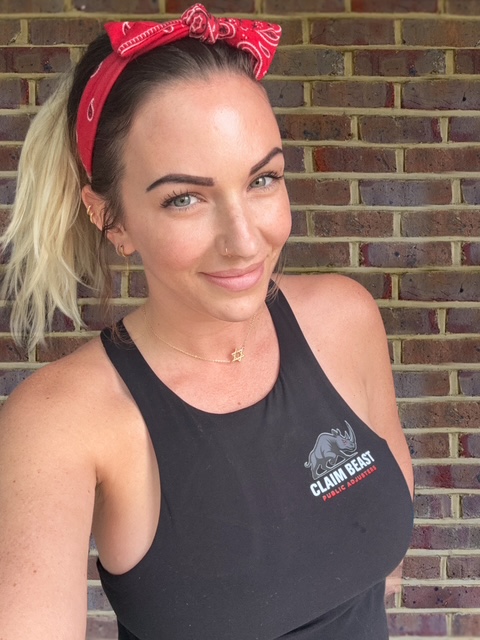
Victoria · Public Adjuster & Co-Owner
A Florida licensed public adjuster, Victoria spent years inside the industry before joining Claim Beast. She brings a homeowner-first approach that pairs precision documentation with genuine compassion for clients going through their worst day.
Free Tampa Bay Claim Review — No Win, No Fee.
Call Claim Beast at (386) 747-9440 or fill out our online form for a free review of your insurance claim.