

If you've been told you should 'lawyer up' on your property insurance claim, pause for a moment. On the majority of Florida property claims, hiring a public adjuster first — and only escalating to an attorney if necessary — produces a better outcome with less cost. Here's the decision framework we walk Tampa Bay homeowners through every week.
The 80/20 Rule on Property Insurance Disputes
In our experience: roughly 80% of property insurance disputes can be fully resolved through public-adjuster-led negotiation, without ever filing a lawsuit. The remaining 20% involve carrier bad faith, complex coverage disputes, or appraisal disputes the carrier refuses to honor — those genuinely need an attorney. Knowing which bucket your claim falls in is the most important decision you'll make in the claim process.
Why 'Public Adjuster First' Usually Wins
- ▸Lower fees — Florida caps public adjuster fees at 20% (10% in declared emergencies first year). Attorney contingency is typically 33-40%.
- ▸Faster resolution — most public-adjuster-led claims resolve in 30-90 days. Litigation takes 12-24 months on average.
- ▸Less adversarial — the claim stays inside the insurance process, which carriers are designed to handle. Lawsuits invite carrier defense counsel, who escalate everything.
- ▸Better documentation — a public adjuster builds the claim from inspection forward. If litigation later becomes necessary, the attorney inherits a finished claim file.
- ▸Lower stress for the homeowner — no depositions, no court appearances, no extended timelines
The Decision Framework
Walk through these four questions in order. The answer tells you which professional to hire — and in what sequence.
You've got the knowledge — now apply it to your specific damage. Our calculator translates everything you just read into an actual dollar range for your home. Try The Calculator →
Question 1: Is the Carrier Refusing to Negotiate at All?
If the carrier has formally denied coverage based on a policy-interpretation issue (e.g., 'this peril isn't covered under your policy') and refuses to engage with new evidence, that's usually a legal interpretation dispute — start with an attorney consultation. Many will offer free initial reviews. If they confirm coverage exists, you can then bring in a public adjuster to document damages.
Question 2: Is the Dispute About the Amount of Loss?
If coverage isn't in dispute but the dollar amount is — the carrier paid less than your damages — this is the textbook public adjuster scenario. Hire a public adjuster first. We'll document the full damages, write the independent estimate, file the supplemental claim, and negotiate. If we can't reach a fair number, the next step (appraisal) is still mostly handled at the public adjuster level, not the attorney level.
Question 3: Has the Carrier Acted in Bad Faith?
Florida statute defines specific carrier behaviors as 'bad faith' — misrepresenting policy provisions, failing to acknowledge claims, refusing to pay without reasonable basis, etc. If the carrier's conduct meets the statutory bad-faith definition, you may have a separate cause of action with statutory damages. That's an attorney case. We see this less often than people assume — most denials are wrong but not 'bad faith' in the legal sense.
Question 4: Is the Claim Over $100,000 or Especially Complex?
Large losses (total losses, major fires, complex commercial property claims) often benefit from engaging both professionals from the start. The public adjuster builds the claim and runs the negotiations; the attorney is on retainer ready to file if needed. This dual-track approach is common on six-figure-plus claims because the stakes justify the parallel expertise.
Common Sequencing Patterns
- ▸Standard underpayment case — Public adjuster only. Document, supplement, negotiate. Resolved in 60-90 days.
- ▸Standard denial case — Public adjuster first to document and dispute. Attorney brought in only if denial holds through mediation.
- ▸Complex coverage dispute — Attorney first for legal opinion. If coverage is confirmed, public adjuster joins to manage damages.
- ▸Bad faith case — Attorney leads, public adjuster supports with damage documentation and ongoing claim management.
- ▸Catastrophic loss — Both from day one. Parallel work.
What Not to Do
- ▸Don't pay both at full contingency on the same recovery dollar. Make sure their fee agreements coordinate.
- ▸Don't hire an attorney before a public adjuster has even inspected — you risk paying lawyer fees on work that could've been done at half the rate.
- ▸Don't sign a contractor's AOB (Assignment of Benefits) thinking it replaces either professional. It doesn't — and it usually makes the situation worse.
- ▸Don't delay. Florida's claim deadlines are tight. Make the decision and act.
Free 'Which Should You Hire' Consultation
Not sure which to hire? We'll tell you honestly. If your claim is one where an attorney is actually the right starting point, we'll say so and recommend qualified property-damage attorneys we trust in the Tampa Bay area. If a public adjuster is the right starting point (the majority of cases), we can begin work immediately. Claim Beast is based in Riverview, FL — request your free consultation here.
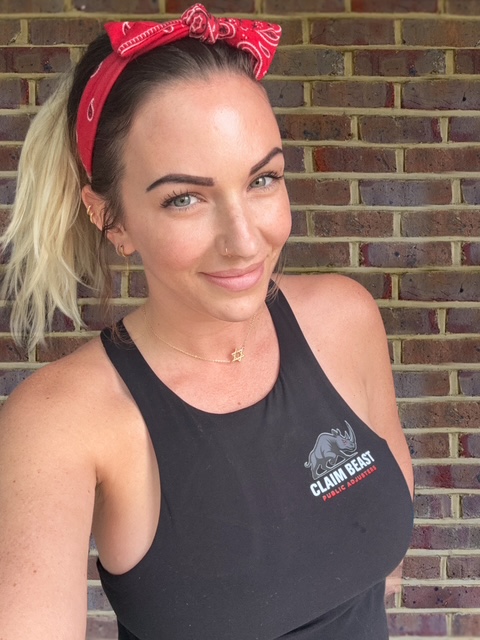
Victoria · Public Adjuster & Co-Owner
A Florida licensed public adjuster, Victoria spent years inside the industry before joining Claim Beast. She brings a homeowner-first approach that pairs precision documentation with genuine compassion for clients going through their worst day.
Free Tampa Bay Claim Review — No Win, No Fee.
Call Claim Beast at (386) 747-9440 or fill out our online form for a free review of your insurance claim.