

There's a moment every underpaid Florida homeowner experiences. The check arrives. The amount sounds substantial — eight, twelve, twenty thousand dollars. You start calling contractors. The first quote comes in. The second. The third. They're all 50%, 80%, sometimes 200% higher than what the carrier sent you. Suddenly the math doesn't work. You either dig into savings, take out a loan, or settle for half-done repairs that hurt the value of your home.
If that's where you are right now — stop. Don't spend a dollar of your own money on repairs. Don't sign any release. Don't even cash the check if you can avoid it. Here's the 5-step playbook we use to recover the underpayment, often doubling or tripling the original offer.
Step 1: Stop the Bleeding (First 24 Hours)
The most expensive mistakes happen in the first 24 hours after the check arrives. Three things to do immediately:
- ▸Don't sign any release, waiver, or settlement document the carrier sent with the check — even if the adjuster says it's 'routine'
- ▸Don't cash the check yet if you're not sure. In Florida, depositing a partial-payment check generally doesn't release future claims, but only if you don't also sign a release. Get clarity first.
- ▸Don't start repairs out of pocket. Once damaged materials are removed, evidence of the underpayment goes with them.
Step 2: Gather the Evidence That Proves Underpayment
Underpayment cases live or die on documentation. Within the first 72 hours, gather:
If your carrier underpaid you, the supplement playbook only works once you know what the claim is actually worth. Our calculator gives you that number in 60 seconds — using current Florida market rates. Calculate My Shortfall →
- ▸The carrier's full estimate (request the line-item Xactimate report in writing if you don't have it — they must provide it)
- ▸Two to three written contractor estimates for the repair work — itemized, not single-line
- ▸Photos and video of every area of damage, taken before any repairs begin
- ▸Your complete policy, with all endorsements (RCV vs ACV, code coverage, matching coverage)
- ▸All written communication with the carrier's adjuster to date
Step 3: Get an Independent Public Adjuster Estimate
The single biggest leverage move you can make is hiring a licensed Florida public adjuster to write an independent Xactimate estimate — the same software the carrier uses. Side-by-side, line-by-line comparison of the two estimates reveals exactly where the carrier underpaid: depreciation that's too aggressive, missing code upgrades, low labor rates, ignored matching, partial-room repairs where Florida law requires full replacement.
This isn't a contractor 'quote' — it's a formal estimate built to the carrier's own documentation standard. They can't dismiss it as inflated.
Step 4: File a Formal Supplemental Claim
Send the carrier a written Supplemental Claim with: (a) reference to the original claim number and date of loss, (b) the specific underpaid line items, (c) the independent Xactimate estimate showing the correct amounts, (d) photos and contractor estimates supporting each line, and (e) a clear dollar demand for the supplemental payment.
Under Florida law, the carrier has a defined response window. Most respond within 14-30 days. Properly documented supplementals are extremely difficult for the carrier to ignore — and our experience is that the majority result in a substantially increased payment.
Step 5: Negotiate, Then Escalate If Needed
If the supplemental response is still light, escalation is straightforward in Florida:
- ▸Appraisal — most policies include an appraisal clause where each party picks an appraiser and they jointly select an umpire. This is faster and cheaper than litigation and binding on amount disputes (not coverage disputes).
- ▸Mediation — Florida DFS offers free mediation for many homeowners claims. Carriers must participate in good faith.
- ▸Litigation — last resort, but Florida has fee-shifting provisions on some property-damage cases that put the carrier on the hook for attorney's fees if you win.
How Much Can You Recover?
Recovery varies by claim, but underpaid claims are routinely doubled or tripled when properly handled. A homeowner offered $14,000 might end up at $48,000 once code upgrades, full matching, proper labor rates, and accurate scope are reflected. The public adjuster's fee (capped at 20% by Florida law, 10% during declared emergencies first year) comes out of the additional recovery — so the homeowner is dramatically ahead in nearly every case.
What If Repairs Are Already Underway?
Not ideal, but not fatal. The earlier you act the better — call the contractor, ask them to pause cosmetic-removal work if possible, and document everything that's already been removed (photos, salvaged materials, invoices). A skilled public adjuster can still recover underpayment on partially completed projects if there's enough documentation.
Free Underpayment Review
Bring us your carrier's estimate and any contractor quotes. Within 48 hours, we'll tell you whether you're being underpaid and by approximately how much. Claim Beast Public Adjusters is based in Riverview and serves homeowners across the Tampa Bay area. No upfront cost — request your free underpayment review here.
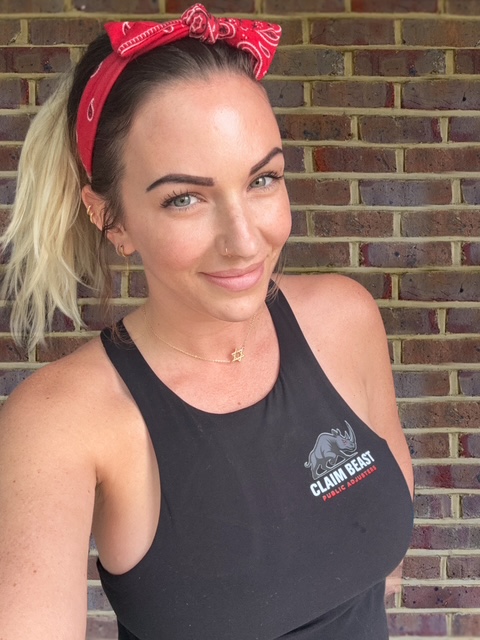
Victoria · Public Adjuster & Co-Owner
A Florida licensed public adjuster, Victoria spent years inside the industry before joining Claim Beast. She brings a homeowner-first approach that pairs precision documentation with genuine compassion for clients going through their worst day.
Free Tampa Bay Claim Review — No Win, No Fee.
Call Claim Beast at (386) 747-9440 or fill out our online form for a free review of your insurance claim.